

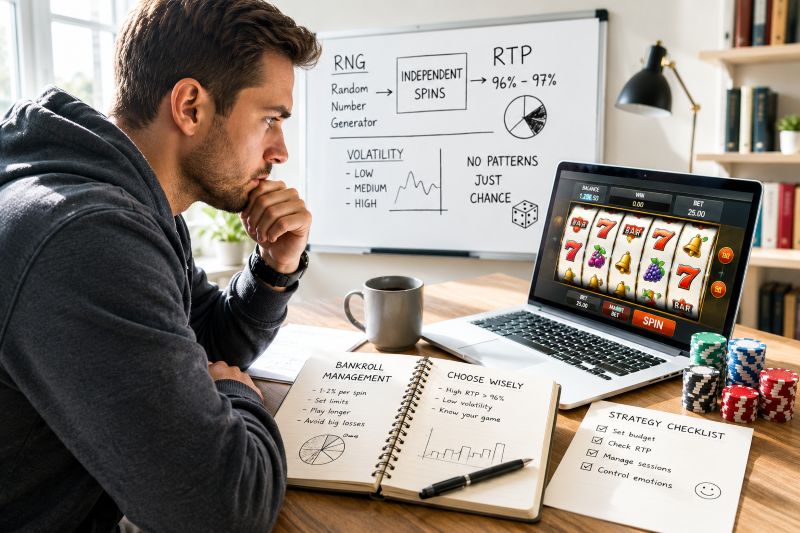
The world of slot games is often seen as purely luck-based, and in many ways, that is true. Every spin is determined by a random number generator, meaning no strategy can guarantee a win. However, that doesn’t mean players are completely powerless. While you can’t control outcomes, you can control how you play, how long you play, and how efficiently you manage your bankroll. That’s where smarter slot strategies come in.
This article explores practical, realistic approaches that help you play more thoughtfully instead of impulsively.
Understanding How Slot Games Really Work
Before applying any strategy, it’s important to understand the mechanics behind a slot game. Every modern slot uses a Random Number Generator (RNG), which ensures each spin is independent from the last. This means patterns, “hot streaks,” or “due wins” are misconceptions.
Knowing this helps you avoid one of the biggest mistakes players make: chasing losses or believing a machine will eventually “pay out.” A smarter mindset begins with accepting randomness as the foundation of every slot session.
Bankroll Management: The Core of Smart Play
The most important strategy in any slot game is managing your bankroll effectively. Instead of focusing on winning big, focus on lasting longer in the game.
A practical approach is dividing your budget into smaller session amounts. This prevents you from exhausting your funds too quickly and keeps your play controlled. Setting limits before you start playing also helps avoid emotional decisions during losing streaks.
Good bankroll management doesn’t increase your odds of winning a slot, but it significantly improves your overall experience and reduces financial risk.
Choosing the Right Slot Game Matters
Not all slot games are created equal. Each game has its own volatility level, return-to-player (RTP) percentage, and bonus structure.
Low-volatility slots tend to offer smaller but more frequent wins, making them suitable for longer play sessions. High-volatility slots can be more unpredictable but may offer larger payouts. Choosing the right type depends on your personal goals—whether you prefer steady gameplay or high-risk excitement.
Understanding these differences allows you to select a slot that aligns with your play style rather than relying on random choice.
Setting Win and Loss Limits
One of the most overlooked strategies in slot gaming is setting clear exit points. Many players continue spinning after a win, only to give everything back to the game.
A smarter approach is deciding in advance when to stop. For example, you might choose to walk away after doubling your session budget or after losing a set amount. This discipline helps protect your winnings and prevents emotional escalation during losses.
Having limits transforms slot play from impulsive gambling into structured entertainment.
Avoiding Common Psychological Traps
Slot games are designed with engaging visuals, sound effects, and near-miss scenarios that can influence player behavior. These features can create the illusion that a win is “close,” even when it is not.
One common trap is the “chasing losses” mindset, where players continue playing in an attempt to recover lost money. Another is the belief that switching machines improves odds, when in reality, each slot operates independently.
Recognizing these psychological triggers helps you stay in control and make rational decisions.
Using Bonuses Wisely
Many platforms offer bonuses such as free spins or deposit matches. While these can extend gameplay, they should be used carefully.
Bonuses often come with wagering requirements, meaning you must play a certain amount before withdrawing winnings. Understanding these conditions is crucial before using them on a slot game.
When used strategically, bonuses can increase playtime without increasing personal risk, but they should never be treated as “free money.”
Timing and Session Control
Another practical approach to smarter slot play is managing your time. Long, uninterrupted sessions often lead to fatigue and poor decision-making.
Short, controlled sessions help maintain focus and reduce emotional betting. Taking breaks between sessions also allows you to reset mentally, preventing impulsive behavior that often leads to unnecessary losses.
Time control is just as important as money control in responsible slot gaming.
Conclusion
While no strategy can change the inherent randomness of a slot game, you can absolutely change how you approach it. Smart play is about discipline, awareness, and control—not prediction.
By managing your bankroll, choosing suitable games, setting limits, and avoiding emotional decisions, you transform slot gaming from chaotic guessing into structured entertainment. In the end, the smartest strategy is not chasing wins, but playing responsibly and knowing when to stop.
